
Red light therapy has moved from research labs into physio clinics, gyms and living rooms. People use it for stubborn pain, slow-healing injuries, sore knees and even weight loss.
Some of those uses have decent evidence behind them, and some don’t. This guide covers what the light does in your body, where it helps, where it falls short, and how to use it safely.
What Is Red Light Therapy and How Does It Work?
Red light therapy (RLT) shines low-intensity red and near-infrared light onto the body. It uses no UV rays and little heat, so it won’t tan or burn you. Researchers call it photobiomodulation, and clinics may also call it low-level laser or cold laser therapy.
The leading theory is that the light is absorbed by the mitochondria inside your cells and nudges them to make more ATP, the molecule cells use for energy. In theory, better-fuelled cells repair tissue more efficiently and release fewer inflammatory signals.
The two light types behave differently:
- Red light (about 630–660 nm) is absorbed near the surface, which is why it’s popular for skin.
- Near-infrared light (about 810–850 nm) travels deeper, reaching muscles, tendons and joints, which is why it’s used for pain and injuries.
Red Light Therapy Benefits
Here are the benefits with the most support, listed by how often people ask about them:
- Pain relief: may reduce muscle, joint and tendon pain, especially in the short term.
- Less inflammation and swelling: may help calm irritated tissue and reduce swelling.
- Faster tissue repair: studied for wound healing, soft-tissue injuries and recovery after hard exercise.
- Better circulation: increased local blood flow may ease stiffness.
- Skin quality: may support collagen and help with texture and redness.
- Sleep and mood: early research only. Treat it as unproven.
None of these are guarantees. Results depend on the condition, the device, the dose and how consistently you use it.
Red Light Therapy for Pain: What the Evidence Says
Pain is the most researched use of near-infrared light after skin care.
How it may work for pain. The light may calm the inflammatory chemicals around irritated tissue and ease muscle tension by improving blood flow. It may also change how pain nerves fire, which can take the edge off aching and soreness.
What it tends to help:
- Muscle soreness and strain
- Tendon irritation
- Joint pain linked to arthritis
- Neck and low back pain that comes with muscle tightness
What to expect. Many people report gradual relief over several weeks. It rarely works as a one-session fix, and it works best alongside movement, strengthening and hands-on care. If pain is severe, sudden, or comes with numbness or weakness, get an assessment before trying anything else.
Red Light Therapy for Injuries and Healing
Healing tissue was the first medical use of this technology. Here’s where it fits today.
Sports and overuse injuries. Runner’s knee, tendon pain, shin splints and repetitive-strain problems are common reasons people try it. Light therapy may reduce pain and speed up recovery between training blocks, but it doesn’t replace fixing the cause, such as training load or weak muscles.
Swelling and bruising. Because it may reduce inflammation, light therapy is sometimes used to help settle swelling after a sprain or strain. Always get a new injury checked first, since a fracture or serious ligament tear needs different care.
Wounds and scars. Research shows promise for supporting wound healing. For open wounds, follow your doctor’s instructions and use light therapy only if they approve.
Where it fits in recovery. Think of it as one tool in a rehab plan, alongside rest, graded exercise and manual therapy.
Red Light Therapy for Knee Pain
Knee pain is one of the most common reasons people look this up, and the pages that rank for it get a lot of searches.
Can it help? Studies on knee osteoarthritis suggest near-infrared light may reduce pain and stiffness for some people. The research is mixed, though. Some trials show clear improvement, others show little difference from placebo.
What it can’t do. It won’t regrow cartilage or reverse joint damage.
Conditions people use it for:
- Knee osteoarthritis
- Runner’s knee (patellofemoral pain)
- Knee bursitis and tendon irritation
- Pain after an old injury
How often to use it on your knee. A typical approach is 3 to 5 sessions a week for 10 to 20 minutes per session, for at least 4 to 8 weeks. Check your device’s own guidance, because power levels differ a lot.
Do knee wraps and devices work? Quality varies. Look for published wavelengths, clear power specs and independent reviews. If your pain doesn’t improve after a fair trial, stop guessing and have your knee assessed. Our team can help with knee ligament injuries and arthritis.
Red Light Therapy for Legs: Calves, Thighs and IT Band
Large leg muscles get overloaded in runners, cyclists and anyone on their feet all day. Red light therapy is used to support recovery in:
- Calf muscles: tightness, strains and post-exercise soreness
- Thighs: hamstring and quadriceps strains
- IT band: outer-knee and hip pain from friction and overuse
Because these muscles are big and deep, near-infrared light works better than red alone. Pair sessions with stretching, strength work and, if pain keeps returning, a physiotherapy assessment.
Red Light Therapy in Physiotherapy
In a clinic, light therapy is usually an add-on, not the main treatment. A physiotherapist will assess the cause of your pain, then decide if light therapy suits your plan. It may be combined with:
- Exercise prescription
- Manual therapy
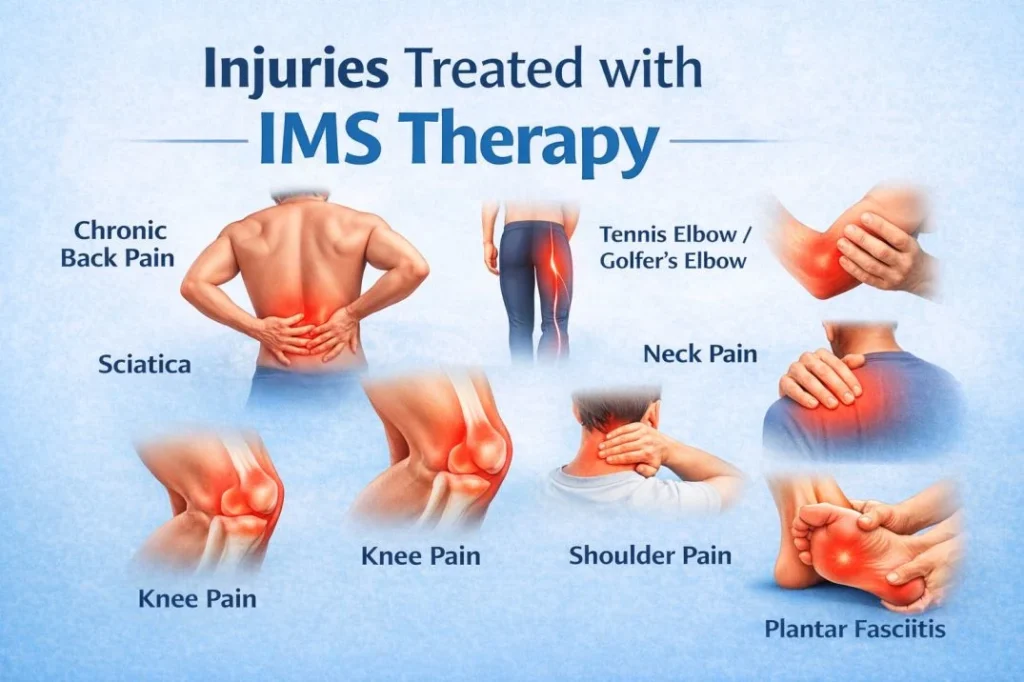
- Shockwave therapy or IMS
- Education on movement and load
We offer this through BioFlex laser therapy at our Mission, BC clinic. The advantage is that treatment settings are matched to your tissue and condition, and progress is tracked.
Red Light Therapy for Weight Loss: What’s Realistic?
This is a popular search and the most overhyped use.
Does it work? Some small studies reported slight reductions in waist or thigh circumference after light treatments, usually alongside exercise or diet changes. These are body-contouring changes measured in centimetres. They don’t show significant weight loss, and sample sizes are small.
Does it burn fat? The light is thought to prompt fat cells to release stored fat, but the body still has to use that energy through movement. Without exercise and a calorie balance, the effect fades or doesn’t show.
What about before-and-after photos? Be careful with them. Lighting, posture, diet, exercise and editing can all change how a photo looks. Clinical measurements are more reliable than photos.
How to use it for weight loss if you try:
- Treat it as a small extra on top of nutrition and activity.
- Use it consistently for several weeks.
- Track waist, hip and thigh measurements, not just scale weight.
- Avoid any provider promising fast fat loss from light alone.
For real fat-loss support, focus on food quality, strength training, daily movement and sleep. If joint pain is limiting how much you can exercise, treating the pain may do more for your weight than any light device.
How Often and How Long Should You Use It?
| Goal | Typical session length | Typical frequency |
| Pain and joint stiffness | 10–20 minutes | 3–5 times a week |
| Muscle recovery | 10–15 minutes | After hard training |
| Skin | 5–15 minutes | 3–5 times a week |
Most people notice changes after 4 to 8 weeks. More time under the light isn’t better, and too much may reduce benefit, so follow your device or practitioner’s guidance.
Clinic Treatment vs. Home Devices
| Clinic treatment | Home device | |
| Power and accuracy | Clinical-grade, set for your condition | Varies widely |
| Guidance | Assessed and monitored | Self-directed |
| Cost | Per session | One-time purchase |
| Best for | Injuries, persistent pain | General recovery, skin |
If you buy a home device, check the wavelengths, the output specs, and whether the product is licensed by Health Canada where required.
Is Red Light Therapy Safe? Risks and Side Effects
It’s generally low risk. Side effects are uncommon and mild, like temporary redness, warmth or eye strain.
- Wear eye protection and avoid staring at the light.
- Don’t exceed the recommended session length.
- Speak to your doctor first if you’re pregnant, take medication that makes you sensitive to light, have a skin condition, or have a history of cancer in the treatment area.
FAQs
Is red light therapy good for pain?
It may help with muscle, tendon and joint pain for some people, usually over several weeks. It works best combined with exercise and professional care.
Does red light therapy work for knee pain?
It may reduce pain and stiffness in knee osteoarthritis and overuse problems, but the research is mixed and it doesn’t repair damaged cartilage.
How often can I use red light therapy on my knee?
Many protocols use 3 to 5 sessions a week for 10 to 20 minutes. Follow your device’s specific instructions.
Does red light therapy help with swelling and inflammation?
It may help calm inflammation and ease swelling in some soft-tissue injuries. A new injury should be assessed first.
Does red light therapy help you lose weight?
Only modestly, and not on its own. Studies mainly show small changes in body measurements when combined with exercise.
Does it work for back pain?
It may ease muscle-related low back pain as part of a plan that includes movement and strengthening. Persistent or severe back pain needs an assessment.
Is red light therapy used in physiotherapy?
Yes. Many physiotherapists use low-level laser or light therapy alongside exercise and manual therapy.
How long should a session last?
Usually 10 to 20 minutes, depending on the device and the body area.
Is red light therapy available near me?
If you’re in Mission, BC or nearby, you can book through our clinic below.
Book Red Light and Laser Therapy in Mission, BC
If pain, a stubborn injury or sore knees are holding you back, our team can find the cause and build a plan that fits. Book online or call 778-298-0111.