

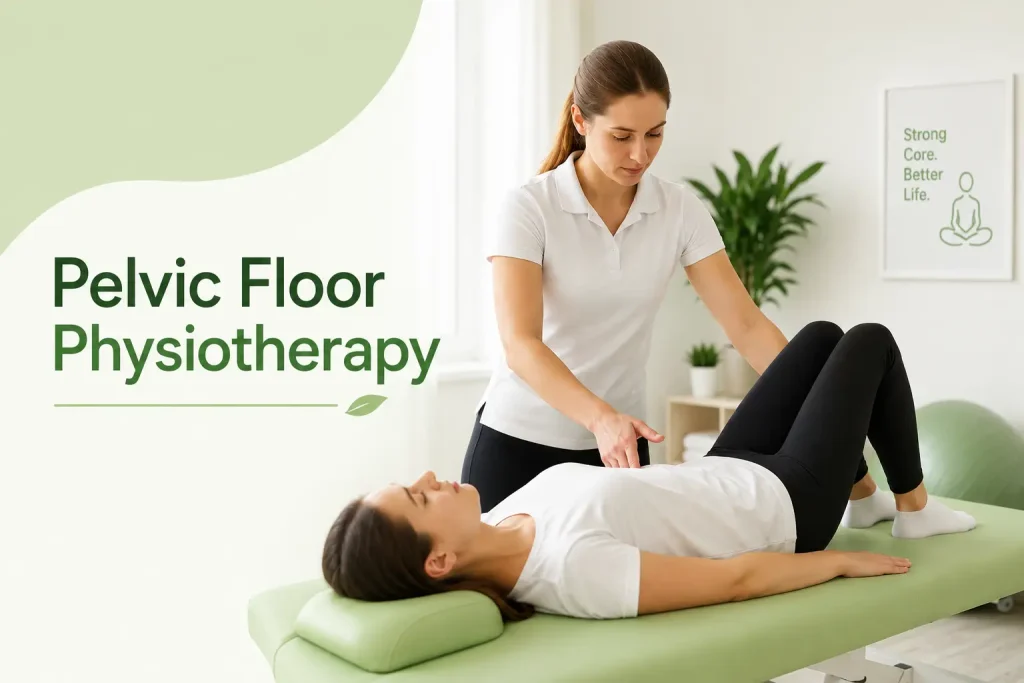
Here’s something most people don’t realize: a small group of muscles you’ve probably never consciously used is working every single time you laugh, sneeze, lift something heavy, or stand up from a chair. When it works well, you never notice it. When it doesn’t, it can quietly affect your daily life for years before anyone gives it a name. That group of muscles is your pelvic floor, and the treatment built specifically for it is called pelvic floor physiotherapy.
This guide breaks down what pelvic floor physiotherapy is, how it differs from general physiotherapy, who it’s for (spoiler: not just postpartum women), what happens in a session, and how to know if it’s right for you.
What Is Pelvic Floor Physiotherapy?
So, what is pelvic floor physiotherapy, exactly? It’s a specialized branch of physiotherapy focused on the muscles, ligaments, and connective tissue that form the “floor” of your pelvis — a hammock-like structure that stretches from your pubic bone to your tailbone.
These muscles aren’t just anatomical background noise. They support your bladder, bowel, and reproductive organs; help control when you urinate, pass gas, or have a bowel movement; stabilize your core and lower back; and play a direct role in sexual function and sensation. When they become too weak, too tight, or poorly coordinated, the ripple effects show up in ways that often seem unrelated to the pelvis at all — chronic low back pain, constipation, or pain during intercourse, for example.
A pelvic floor physiotherapist is a licensed physiotherapist who has completed additional postgraduate training specifically in assessing and treating this muscle group. Their toolkit goes well beyond generic Kegel exercises and includes manual therapy, biofeedback, targeted strengthening or relaxation techniques, and education on posture, breathing, and everyday habits that affect pelvic health.
Who Actually Needs Pelvic Floor Physiotherapy?
There’s a persistent myth that this type of care is only for women after childbirth. In reality, pelvic floor dysfunction affects people of every age and gender, and the underlying causes vary widely — pregnancy and delivery, chronic straining, surgery, aging, high-impact sports, or simply years of poor posture and breathing patterns.
You might benefit from an assessment if you experience:
- Urinary or bowel incontinence — leaking when you cough, laugh, exercise, or feel a sudden, hard-to-control urge
- Pelvic organ prolapse — a sensation of heaviness, bulging, or pressure in the vagina or rectum
- Pelvic pain — persistent discomfort in the lower abdomen, hips, tailbone, or genitals with no clear cause
- Painful intercourse or difficulty with penetration, including conditions like vaginismus
- Prenatal or postpartum changes, including diastasis recti, C-section scar restrictions, or general pelvic weakness
- Constipation or straining that doesn’t respond to dietary changes alone
- Erectile dysfunction or pelvic pain in men, often linked to overly tense (not just weak) pelvic muscles
- Post-prostatectomy incontinence, a common and treatable issue after prostate surgery
- Unexplained lower back or hip pain that hasn’t improved with standard physiotherapy
Notably, weakness isn’t the only problem pelvic floor physiotherapy treats. In many cases — particularly with pelvic pain— the muscles are actually too tight or unable to relax, and strengthening exercises would make symptoms worse. This is why a proper assessment matters far more than following generic advice found online.
What Happens During a Pelvic Floor Physiotherapy Assessment?
The first appointment typically runs 45 to 60 minutes and starts with a detailed conversation: your symptoms, medical history, bladder and bowel habits, birth history if relevant, and your goals for treatment. This is your chance to ask questions and set the pace.
From there, your physiotherapist may recommend a physical assessment, which can include:
- External evaluation of your posture, breathing mechanics, abdominal wall, and hip and spine mobility
- Internal assessment, performed with a gloved, lubricated finger in the vagina or rectum, to directly evaluate the strength, tone, coordination, and flexibility of the pelvic floor muscles
Internal exams are never mandatory. A qualified therapist will explain exactly what it involves, why it’s useful, and will proceed only with your clear, ongoing consent — you can pause or stop at any point. Many people find that once it’s explained clearly, the internal component is far less intimidating than expected, and it often provides information that external assessment alone can’t capture, such as identifying trigger points or asymmetries in muscle tension.
Based on the findings, your physiotherapist builds a personalized treatment plan, which might include manual therapy, biofeedback training, targeted exercises, bladder or bowel retraining strategies, and a home program to reinforce progress between visits.
Common Treatment Techniques
Pelvic floor physiotherapy is not a single exercise — it’s a toolkit matched to your specific findings:
- Pelvic floor muscle training — targeted strengthening for muscles identified as weak or poorly coordinated
- Manual therapy — hands-on release of tight muscles, scar tissue, or restricted connective tissue, both externally and internally
- Biofeedback — using sensors to give real-time visual or auditory feedback so you can learn to correctly contract or relax the right muscles
- Breathing and posture retraining — since the diaphragm and pelvic floor work as a coordinated unit, breathing pattern changes can significantly ease pelvic tension
- Bladder and bowel retraining — behavioral strategies for urgency, frequency, or straining
- Electrical stimulation, in select cases, to help re-educate muscles that have difficulty contracting voluntarily
How Long Does It Take to See Results?
This varies considerably depending on the condition, its duration, and how consistently you follow your home program. Some people notice meaningful improvement within a handful of sessions; others, particularly those with long-standing pain or complex postpartum recovery, may need a longer course of care spanning several months. Your physiotherapist should reassess regularly and adjust your plan rather than keeping you on a fixed, one-size-fits-all schedule.
FAQ’s
Is pelvic floor physiotherapy just Kegels?
No. Kegels are one small tool among many, and for people with tight or overactive pelvic muscles, Kegels can actually worsen symptoms. Proper assessment determines whether you need strengthening, relaxation, or a combination of both.
Do men need pelvic floor physiotherapy?
Yes. Men experience pelvic floor dysfunction related to prostate surgery, chronic pelvic pain syndrome, erectile dysfunction, and incontinence, and dedicated pelvic health physiotherapists treat these conditions regularly.
Is the internal exam mandatory?
No. It’s recommended because it provides the most accurate picture of muscle function, but it’s entirely optional and requires your informed consent at every step.
How soon after giving birth can I start pelvic floor physiotherapy?
Many clinicians recommend an assessment around six weeks postpartum, though timing can vary based on your delivery and recovery. Some clinics also offer earlier consultations for guidance on safe movement.
Can pelvic floor physiotherapy help with lower back pain?
It can, particularly when back pain is linked to core and pelvic floor dysfunction rather than a purely structural spinal issue. A thorough assessment will help determine whether this is a contributing factor for you.
Pelvic floor physiotherapy addresses a group of muscles that quietly influence bladder control, bowel function, core stability, and comfort in daily movement — yet it remains one of the most under-discussed areas of physical therapy. Whether your symptoms are new or something you’ve lived with for years, a proper assessment from a trained pelvic floor physiotherapist is often the first real step toward understanding what’s actually going on and building a plan to fix it.