
Whether you’re looking to relax, recover from muscle soreness, or simply understand what happens on the massage table, this guide covers everything you need to know about full body massage therapy techniques — explained in plain, easy-to-understand language.
What Is Full Body Massage Therapy?
A full body massage is a hands-on therapy where a trained therapist works on most of the major muscle groups in your body — typically covering the back, neck, shoulders, arms, legs, and feet. Some sessions also include the scalp, face, and abdomen depending on the style and your preferences.
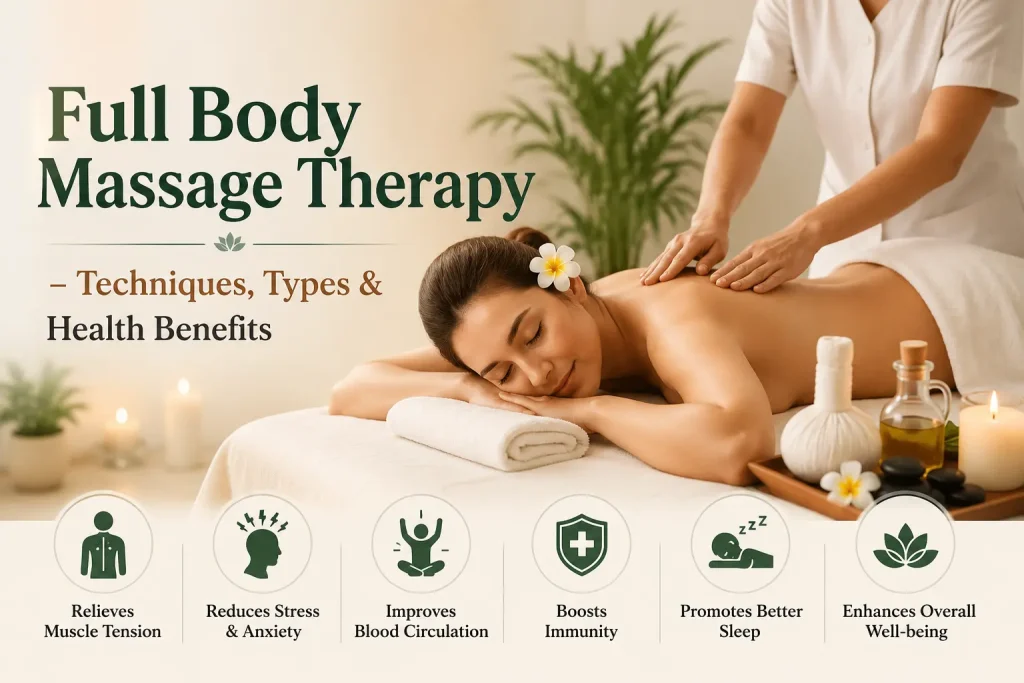
The goal isn’t just relaxation. Full body massage can improve blood circulation, reduce muscle tension, ease stress, improve sleep, and support overall physical recovery.
The Most Common Full Body Massage Techniques
1. Swedish Massage (Effleurage, Petrissage, Tapotement)
Swedish massage is the most widely practiced style and is the foundation of most Western massage techniques. It uses five core movements:
- Effleurage — Long, gliding strokes along the length of the muscle. This is usually how a session starts and ends. It warms up the tissue and signals the body to relax.
- Petrissage — Kneading, rolling, and squeezing motions that work deeper into muscle tissue. Think of how you knead dough — same idea. Great for releasing knots.
- Tapotement — Rhythmic tapping or percussion using the sides of the hands, cupped palms, or fingertips. It stimulates circulation and wakes up the nervous system.
- Friction — Small, deep circular movements usually around joints and tight spots. Breaks down adhesions in the muscle tissue.
- Vibration — Rapid shaking or trembling motions applied to a muscle group. Loosens stiffness and improves mobility.
Swedish massage is ideal for first-timers, stress relief, and general relaxation.
2. Deep Tissue Massage
Deep tissue targets the deeper layers of muscle and connective tissue (fascia). Therapists use slow, firm pressure and concentrated strokes to reach areas that Swedish massage doesn’t fully address.
This technique is especially useful for:
- Chronic pain in the neck, back, or shoulders
- Postural problems from long hours of sitting
- Muscle tightness from repetitive movement or injury recovery
It can feel intense during the session, and mild soreness for 24–48 hours afterward is normal. It’s not about pain — a good deep tissue massage should feel like “productive discomfort,” not sharp pain.
3. Trigger Point Therapy
Trigger points are tight spots within muscle tissue — often called knots — that cause referred pain. For example, a trigger point in your shoulder can cause headaches or arm pain.
The technique involves applying direct, sustained pressure to these points until the tension releases. Therapists use thumbs, knuckles, or elbows to hold pressure for several seconds at a time.
This is one of the most targeted techniques in a full body session. If you have specific chronic pain areas, this is worth requesting.
4. Myofascial Release
Fascia is the thin web of connective tissue that wraps around every muscle and organ in your body. When it gets tight or restricted, it limits movement and causes pain.
Myofascial release uses slow, sustained stretching pressure — no oils, no quick movements. The therapist holds gentle tension on the fascial tissue and waits for it to release naturally. It feels gentle but can produce profound results, especially for people with widespread tension or conditions like fibromyalgia.
5. Sports Massage
Developed for athletes but useful for anyone with an active lifestyle. Sports massage blends Swedish techniques with deep tissue work and stretching.
It’s used in three ways:
- Pre-event — Stimulating, faster strokes to warm up muscles before activity
- Post-event — Slower, flushing strokes to help the body recover faster
- Maintenance — Regular sessions to prevent injury and improve performance
Even if you’re not a professional athlete, sports massage is excellent if you work out regularly, run, cycle, or have physically demanding work.
6. Hot Stone Massage
Smooth, heated basalt stones are placed on key points of the body (spine, palms, between toes) and also used as massage tools. The heat penetrates deep into muscle tissue far more quickly than hands alone.
The combination of heat and massage pressure:
- Melts tension in deep muscles faster
- Improves circulation
- Promotes deep relaxation
Cold stones can also be alternated to reduce inflammation. Hot stone massage is particularly good for people who feel their muscles are constantly tight or cold.
7. Shiatsu
Shiatsu is a Japanese technique based on the principles of traditional Chinese medicine. Instead of long strokes, the therapist applies rhythmic finger and palm pressure to specific points (called acupressure points) along energy channels in the body called meridians.
No oil is used. Sessions are typically done fully clothed on a floor mat or low table.
Benefits include:
- Reducing fatigue and mental stress
- Improving digestive issues
- Supporting the nervous system
- Easing headaches
It feels very different from Swedish or deep tissue — more rhythmic and meditative.
8. Thai Massage
Often called “lazy yoga,” Thai massage is an active, assisted stretching technique. The therapist uses their hands, knees, legs, and feet to move you through a series of yoga-like stretches while also applying pressure along energy lines.
There’s no oil. You stay clothed. The session is dynamic and sometimes surprising.
It improves flexibility, joint mobility, and energy levels. It’s great for people who feel stiff, compressed, or stuck in repetitive movement patterns.
9. Lymphatic Drainage Massage
The lymphatic system is responsible for removing waste and toxins from the body. When it’s sluggish, it can cause swelling, puffiness, or fatigue.
Lymphatic drainage uses extremely light, rhythmic, directional strokes to stimulate lymph flow. The pressure is so gentle it barely dents the skin — which surprises many people — but the technique is precise and follows the actual lymph pathways in the body.
It’s recommended for:
- Post-surgical recovery (especially after cancer treatment or cosmetic surgery)
- Chronic swelling or edema
- Immune support
- Reducing water retention
This is a specialized technique and should be performed by a trained therapist.
10. Reflexology
Reflexology focuses exclusively on the feet, hands, and sometimes ears — but the effects are felt throughout the entire body. The theory is that specific zones on the feet correspond to specific organs and systems.
Deep thumb and finger pressure is applied to these zones in a methodical pattern. Many people find it deeply relaxing even though it’s localized. It’s commonly added to the end of a full body session as a finishing technique.
The Typical Flow of a Full Body Massage Session
Most full body sessions run 60–90 minutes. Here’s what a typical sequence looks like:
- Back of the body first — Back, lower back, glutes, hamstrings, calves, feet
- Front of the body second — Shoulders, chest, arms, hands, quads, shins, feet
- Neck and scalp — Often done near the end
- Face (optional) — Gentle techniques for jaw tension, sinuses, and scalp
The therapist usually checks in about pressure preferences and any areas to avoid. Always speak up — communication makes the session far more effective.
Benefits of Regular Full Body Massage
Beyond just feeling good in the moment, consistent massage therapy has documented benefits:
- Reduces cortisol (the stress hormone) and increases serotonin and dopamine
- Lowers blood pressure and heart rate
- Improves range of motion and flexibility
- Speeds up muscle recovery after exercise
- Reduces chronic pain from conditions like lower back issues, headaches, and arthritis
- Improves sleep quality
- Supports the immune system through lymphatic stimulation
- Reduces anxiety and symptoms of depression
The research on these benefits is solid. Massage isn’t a luxury — for many people, it’s a legitimate part of managing their physical and mental health.
What to Know Before Your First Session
- Undress to your comfort level. Therapists are trained to drape you properly. Only the area being worked on is ever uncovered.
- Drink water afterward. Massage moves fluid through the tissues. Hydrating helps the body flush metabolic waste.
- Communicate throughout. Too much pressure? Too little? Tell your therapist. They won’t take it personally — feedback helps them give you a better session.
- Arrive a few minutes early. Rushing in stressed undoes some of the benefit before you even start.
- Don’t eat a heavy meal beforehand. Give yourself at least an hour.
- Mild soreness is normal. Especially after deep tissue. It usually fades within a day.
Choosing the Right Technique for Your Needs
| Your Goal | Best Technique |
| General relaxation and stress relief | Swedish Massage |
| Chronic muscle pain or tension | Deep Tissue / Trigger Point |
| Improved flexibility and mobility | Thai Massage / Sports Massage |
| Post-workout recovery | Sports Massage |
| Swelling or post-surgery recovery | Lymphatic Drainage |
| Deep muscle relaxation with heat | Hot Stone Massage |
| Energy balance and stress | Shiatsu |
| Whole-body effects from feet only | Reflexology |
Final Thoughts
Full body massage therapy is one of the most well-researched and widely practiced forms of physical therapy in the world. Understanding the techniques helps you walk into a session with clarity about what you need — and walk out with the results you’re actually looking for.
The best massage is the one that matches your body’s current needs. Don’t be afraid to try different styles or mix techniques. A good therapist will often blend multiple approaches in a single session based on what your body calls for.
Your body works hard. Massage is one of the most direct, effective ways to support it.