

Recover Stronger from Knee Ligament Injury in Mission
- Pain Relief
- Knee Stability
- Mobility Recovery
- 4.9/5 Google Reviews
- Licensed Physiotherapists
- Direct Insurance Billing
What Is a Knee Ligament Injury?
These injuries range from mild overstretching (Grade I) to complete ruptures (Grade III) and can significantly affect your ability to walk, exercise, or perform everyday tasks. Whether the injury stems from a sports collision, an awkward landing, or an accidental fall, prompt and structured physiotherapy is essential to support healing, rebuild strength, and prevent long-term joint instability.
Symptoms of Knee Ligament Injuries

Knee Pain
Sharp or aching pain around the knee joint, worsening with movement, weight-bearing, or physical activity after injury.

Swelling & Stiffness
Inflammation and stiffness develop quickly, limiting knee motion and making bending or straightening the leg difficult.

Joint Instability
The knee may feel unstable or give way during walking, running, or changing direction due to ligament damage.

Understanding the Four Knee Ligaments
- Anterior Cruciate Ligament (ACL): The ACL runs diagonally through the centre of the knee and controls rotational movement and forward tibial shift. It is among the most commonly injured ligaments, particularly in sports that involve rapid direction changes, jumping, or sudden deceleration.
- Posterior Cruciate Ligament (PCL): Located at the back of the knee, the PCL prevents the tibia from sliding backward behind the femur. PCL injuries most often result from a direct blow to the front of a bent knee — a common occurrence in motor vehicle accidents or contact sports.
- Medial Collateral Ligament (MCL): Running along the inner side of the knee, the MCL guards against inward buckling of the joint. A direct impact to the outside of the knee — or a forceful outward rotation — can overstretch or tear this ligament.
- Lateral Collateral Ligament (LCL): The LCL stabilizes the outer knee and resists excessive outward shifting. LCL injuries, though less frequent, typically occur when force is applied to the inner knee, pushing it outward.
Which Physiotherapy Treatments Are Used for Knee Ligament Injury?
Physiotherapy for knee ligament injury focuses on reducing pain, restoring stability, improving mobility, and strengthening supporting muscles safely.
What are the Causes of Knee Ligament Injury?
Knee ligament injuries occur due to sudden twisting movements, direct impact, overuse, or improper landing during physical activities.

Sports Injuries
Sudden changes in direction, jumping, or collisions during sports place excessive stress on knee ligaments, causing injury.

Direct Trauma
A direct blow to the knee from falls or accidents can overstretch or tear knee ligaments.

Overuse Strain
Repetitive stress without adequate rest weakens ligaments over time, increasing susceptibility to injury.
When to See a Physiotherapist for Knee Ligament Injury
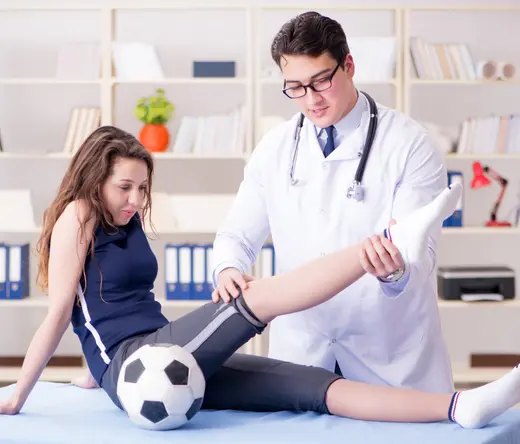
You should consider seeing a physiotherapist if you notice any of the following:
- Ongoing knee pain or swelling that doesn’t improve after a few days
- Difficulty putting weight on your leg or walking comfortably
- A feeling that your knee is unstable or may “give out”
- Reduced ability to bend or straighten your knee fully
- Stiffness or weakness affecting daily activities
Seeking physiotherapy at the right time can help prevent the injury from worsening and support a faster, safer recovery.
Start Strong Recovery from Knee Ligament Injuries Today
Begin personalized physiotherapy to reduce pain, restore knee stability, improve mobility, and safely return to daily and sports activities.